Discover the technology behind the CAN protocol. CAN Classic – formerly CAN 2.0 – forms the basis of all CAN protocols, including CAN FD and CAN XL.
This is a series of articles about the technology behind CAN. At the end of each post, there is a button to the next article, or you can choose a specific topic from the menu at the bottom on the left.
Click right at the very top for an overview of all the know-how articles.
Controller Area Network
CAN – short for Controller Area Network – was developed by Bosch in 1986 to connect electronic modules in cars. This enabled the development of new functions: for example, anti-spin control when accelerating can be achieved if the ABS system transmits information about wheel slip to the engine management system.
Later, CAN was also used to simplify complex wiring harnesses by sending signals – for example, regarding lighting – to modules in the headlights. Bosch developed a new bus because existing protocols did not meet the automotive industry’s requirements.
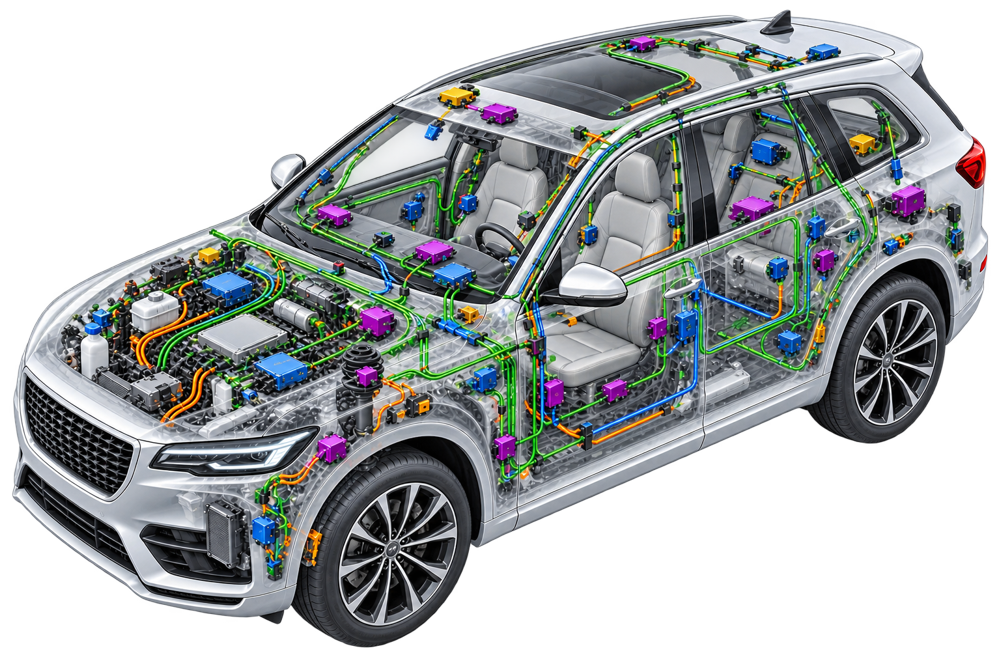
Car manufacturers were primarily looking for a cost-effective solution that would operate reliably in real time and under all conditions. The first CAN bus application was in the 1990 Mercedes-Benz 500E. The first genuine mass-produced model was also a Mercedes: the 1991 S-Class, which featured a CAN bus with five ECUs in a row.
Nowadays, virtually every car contains one or more CAN bus networks. Often, a high-speed bus is used to connect electronic modules such as ABS, transmission control, engine management and similar systems. A lower-speed bus connects modules in the doors, the roof, the dashboard and the lighting system for comfort and control functions. CAN - now officially known as CAN Classic - is defined as a standard in ISO 11898-1.

CAN today
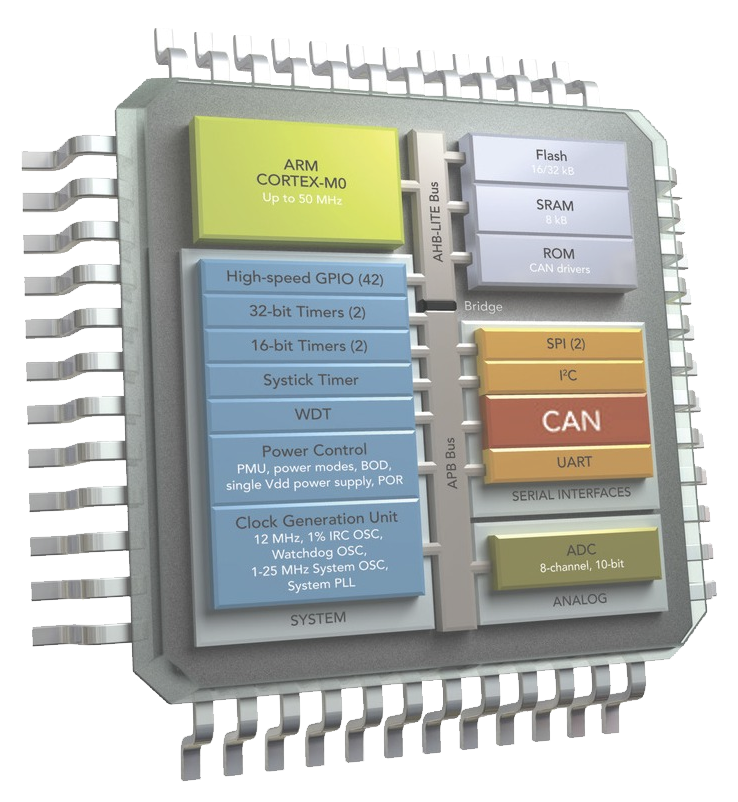
35 years after the first CAN protocol controller chips came onto the market, the use of CAN is still on the rise. The automotive industry remains the driving force behind CAN and accounts for more than one hundred million (!) CAN nodes per year. In addition to cars and lorries, it is also used in every conceivable mobile system, such as heavy-duty vehicles, ships, trains, specialised vehicles, and so on. Furthermore, CAN is also being used to an increasing extent in industrial automation and in many integrated systems across a wide range of applications, from battery systems to container cranes.
Higher-level protocols
Based on the CAN protocol, various standardised higher-level protocols and profiles such as CANopen, DeviceNet and SAE J1939 have been developed. CANopen is an open standard for industrial applications and is often used in conjunction with PLCs. J1939 was developed for American cars but is now primarily known as a standard for lorries and heavy-duty vehicles. DeviceNet was developed by Rockwell as a bus for industrial applications.
Partly thanks to these protocols, turnkey solutions for the implementation of distributed applications are available for integrated system implementation. Standardised communication mechanisms, identifier allocation, network management functions and numerous device and application profiles enable compatibility and the interchange of equipment from different manufacturers.
Advantages
CAN-based networks offer, at low cost, high fault tolerance, high reliability and standardised communication that is truly real-time. The automotive industry’s requirements for electronics and networks are comparable to those of professional applications, but at the purchase prices of consumer products. Thanks to the high volumes, this is also economically viable.
Do cars also use other networks?
Yes, the automotive industry is so vast – more than 80 million cars are manufactured worldwide each year – that multiple types of networks are used in parallel to optimise production costs.
There are protocols that are simpler than CAN and are used where CAN is too expensive. On the other hand, there are protocols that are much faster than CAN, for example for body control or steer-by-wire applications, or indeed for multimedia. Ethernet is also being used more frequently, for example for IP cameras.